
A hopeful first step: inside the first meeting of Tinnitus UK’s Research Evolution Group
A new group of experts has come together to help Tinnitus UK accelerate tinnitus research. We go behind the scenes and learn about the first meeting here

For millions of people living with tinnitus, research offers something deeply important: hope.
That sense of hope sat at the heart of the very first meeting of the Research Evolution Group, a new initiative from Tinnitus UK designed to bring together experts from research, healthcare, industry and the charity sector. Their shared aim is simple but ambitious: to help shape a clear research strategy for Tinnitus UK that moves the field forward and improves life for people living with tinnitus.
This first session marked the beginning of a focused four-month journey. It was not about deciding what the whole research world should do. Instead, it centred on a practical question: where can Tinnitus UK make the biggest difference?
“Tinnitus UK is uniquely positioned to represent the voice of patients and act as a bridge”
Why this group matters
The Research Evolution Group was created to provide insight, expertise and constructive feedback to Tinnitus UK as the charity develops its internal research strategy. The strategy will guide what the charity itself should prioritise in the coming years – ensuring time, funding and energy are directed where they can have the greatest impact.
This distinction is important. Tinnitus research is complex and wide-ranging, from brain science and hearing technology to psychology and self-management. No single organisation can do everything. By focusing on where it adds unique value, Tinnitus UK hopes to accelerate progress in meaningful ways.
A thoughtful and structured beginning to real-world change
The first meeting followed a carefully designed agenda that balanced discussion, reflection and forward thinking.
The session also explored values, ways of working and expectations. Members agreed on the importance of respectful debate, constructive challenge and confidentiality – creating a safe space for honest conversation and new ideas.
From there, discussion moved into open ideation:
- Where can Tinnitus UK add the most unique value in research?
- What gaps or opportunities exist from a charity perspective?
- Which areas could Tinnitus UK realistically deliver impact within the next few years?
Finally, the group began narrowing priorities, recognising that meaningful change requires focus as well as ambition.
This structured flow ensured the meeting was inspirational and practical.
Meet the people behind the progress
At the centre of the Research Evolution Group is a diverse mix of voices. Members bring experience from clinical care, scientific research, innovation and patient advocacy.
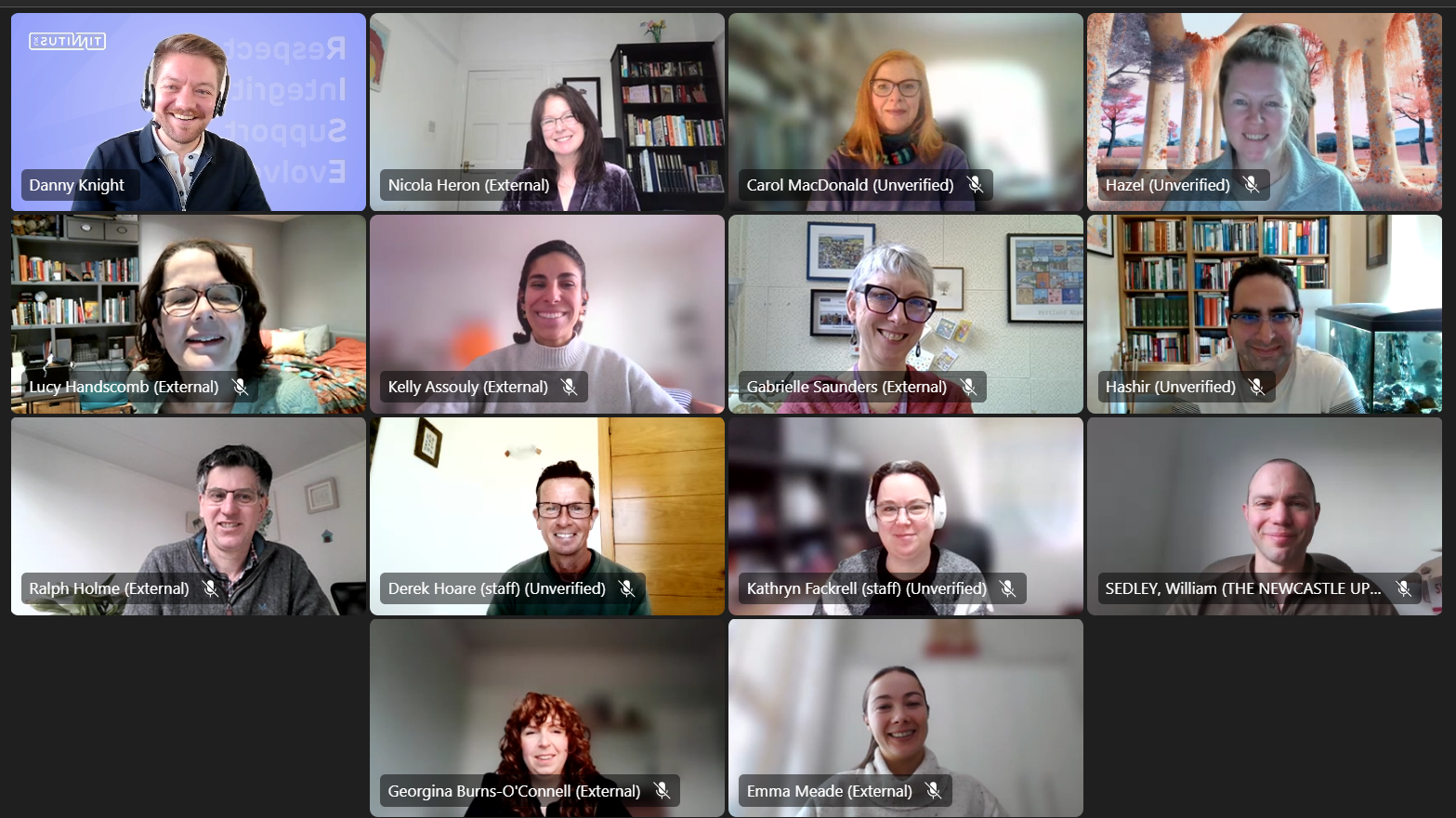
We are grateful to have the leadership of Nicola Heron (Medicines Discovery Catapult), and the expertise of Derek Hoare, Kathryn Fackrell and Carol MacDonald (Nottingham Biomedical Research Centre), Lucy Handscombe (UCL), Gabrielle Saunders (University of Manchester), Hashir Aazh (Hashir Institute), Will Sedley (Newcastle University), Georgie Burns-O’Connell (Aston University), Ralph Holme (RNID), Hazel Goedhart (Tinnitus Hub), Emma Meade (Neuromod) and Kelly Assouly (Cochlear).
While their backgrounds differ, they share a common motivation: improving outcomes for people living with tinnitus.
Each member contributes:
- Specialist knowledge of tinnitus science, treatment or support
- Real-world insight into patient needs and healthcare systems
- Strategic thinking about where investment and collaboration can drive change
This blend of perspectives is essential. Tinnitus is not just a medical condition – it affects sleep, concentration, emotions, relationships and quality of life. Progress therefore requires collaboration across many fields.
“With this group, we can accelerate our shared vision of a world without constant tinnitus noise”
From ideas to real-world impact
One of the most encouraging themes from the meeting was realism combined with optimism.
Members recognised:
- Research takes time
- Resources are limited
- Breakthroughs rarely happen overnight
Yet there was also strong belief that focused strategy can accelerate progress. By choosing the right priorities, supporting the right partnerships and amplifying the voices of people with tinnitus, meaningful change becomes far more achievable.
Importantly, the group discussed not only what to focus on, but also what not to pursue – a difficult but necessary step in building an effective strategy.
This willingness to make clear choices signals a mature and determined approach.
Why should you care?
For anyone experiencing tinnitus – especially those who have lived with it for years – research news can sometimes feel distant or slow.
The creation of the Research Evolution Group offers reassurance in several ways:
- A clear plan is being built
Rather than scattered activity, Tinnitus UK is developing a structured strategy guided by expert insight.
- Collaboration is central
Bringing together voices from research, healthcare, industry and lived experience increases the chance of meaningful interventions.
- Real-world benefit is the focus
The aim is not just scientific discovery, but better management options, potential cures, policy change and awareness – outcomes that truly change lives.
The road ahead
This first meeting was only the beginning. Over the next four months, the group’s insights will help shape Tinnitus UK’s research strategy, with continued involvement from members between sessions and clear plans for future engagement.
While no single meeting can solve tinnitus, this structured and collaborative start represents something powerful: momentum.
“Success in tinnitus research does not come from promises of instant cures. It comes from steady, thoughtful progress.”
Shaping the future of tinnitus research
Progress in tinnitus research does not come from promises of instant cures. It comes from steady, thoughtful progress – experts working together, asking the right questions, and refusing to accept that progress is out of reach.
The first meeting of the Research Evolution Group showed exactly that spirit.
By listening carefully, thinking strategically and focusing on real-world impact, Tinnitus UK is taking an important first step toward its mission of working with the research community to find cures – and better ways to live well with tinnitus.
For the millions who hear sound where there is none, that step matters. And it points toward a future that feels, at last, a little quieter and a little brighter.
Can you help support our upcoming work?
Research can't be done alone... and we can't do this without you. If you can donate even a small amount to our appeal, you'll be helping support this brand-new research initiative, plus our life changing services and everything else we do. Please, if you want to see a world without tinnitus, consider donating now
Please donate now