
From panic and fear to living well with tinnitus
Howard's Story
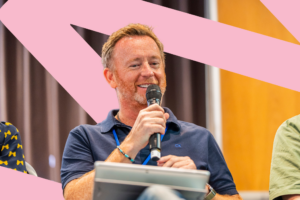
Howard was 40 when tinnitus became a permanent part of his life. A guitarist, music had always been a source of joy and creativity. One rehearsal changed that relationship completely.
“I was practising for my 40th birthday gig and standing too close to a speaker in a rehearsal room. When I left, I had quite bad tinnitus. I had experienced ringing before, like most musicians, so I assumed it would go away.” It didn’t.
For the first couple of days, Howard felt confused rather than afraid. But when the sound was still there after several mornings, anxiety began to take hold.
“I started researching online and that’s when the panic really set in. I became hyper aware of the sound and completely unable to ignore it.”
Searching for answers
Howard eventually went through the usual NHS pathways. GP appointments, an ENT referral, hearing tests and hearing aids followed. He was diagnosed with mild hearing loss at the same pitch as his tinnitus.
“The hearing aids helped a little, but they weren’t really designed for what I personally needed. I wasn’t wearing them for hearing loss; I was wearing them for tinnitus relief. It all felt like a lot of effort for very limited benefit.”
Like many people with tinnitus, Howard tried multiple approaches. CBT, mindfulness, medication, in ear maskers and sound therapies. He describes this period as one of intense determination, but focused in the wrong direction.
“For a long time, my determination was about curing tinnitus. I was trying to fix it, stop it, make it go away. That led to frustration and disappointment. It took me a long time to truly accept that tinnitus might not go away.”
When music became something to fear
Music, once a source of happiness, became threatening. “I went from associating music with joy to associating it with fear. Even silence became a problem because that’s when the tinnitus was loudest. I lost trust in sound.”
Howard stopped feeling confident in loud environments and found himself constantly managing risk, monitoring volume levels and worrying about making things worse. “That constant stress feeds tinnitus. It becomes a cycle.”
Shifting towards management, not cure
The turning point came when Howard shifted his focus from fighting tinnitus to learning how to live with it.
“What really helped me was consistent background sound. White noise reduced the sense of threat from the tinnitus. But managing that was exhausting. Switching devices on and off all day meant I was constantly thinking about tinnitus, which is the opposite of what you want.”
Howard wanted something passive and practical that could support him throughout the day and night without effort.
“I went looking for it and it didn’t exist. Everything was too big, too intrusive, or didn’t fit into everyday life.”
So, he decided to build it himself.
Turning lived experience into a solution
Howard began experimenting with prototypes, initially something as simple as a circuit board in a small container. The aim was not to cure tinnitus, but to make it less intrusive and support the habituation journey.
“We never advise people to mask the sound completely and my invention was more about distraction: taking the edge off the tinnitus, so my brain could relax and stop focusing on it.”
As prototypes improved, Howard shared them with friends and family who also lived with tinnitus. The feedback was consistently positive.
“It’s simple, but it works. People said it helped them stop constantly thinking about their tinnitus. Sometimes you forget it’s working because you haven’t thought about the noise for hours.”
Progress was unfortunately impacted when, whilst windsurfing, Howard suffered a high-speed crash which resulted in a head injury leading to a brainstem stroke, coma and life-saving surgery. He had to relearn basic skills such as walking, writing and speaking. The physical trauma, combined with the intense stress of rehabilitation, significantly worsened his tinnitus. Recovery was long and demanding, but ultimately successful. The experience reinforced his determination to make TinniSoothe a reality, once recovered.
Howard went on to co found a company rooted in lived experience, honesty and transparency. He is clear that what he created is not a cure.
“There is so much misinformation and exploitation in the tinnitus space. We were determined to be honest. This may help some people. It may not help others. And that’s okay.”
The invisible impact of tinnitus
Howard is passionate about helping people understand the mental and emotional toll tinnitus can take.
“For some people, tinnitus is nothing. For others, it is everything. The fact that it’s invisible makes it incredibly hard for people to understand just how distressing it can be.”
Sleep disruption, anxiety, stress and emotional exhaustion are common, yet often misunderstood.
“That’s why prevention matters so much. If we don’t have a solution, protecting hearing is the best tool we have.”
What Howard wishes he had known
When asked what he would say to someone newly experiencing tinnitus, Howard pauses.
“Try not to panic. I know that’s hard, but tinnitus can be managed. Many people live happy, fulfilling lives with it.”
He encourages people to seek reliable information, avoid internet rabbit holes, and build a personal tinnitus toolkit that supports both hearing health and mental wellbeing.
“There is no single solution. Different people need different things. But you are not alone, and this doesn’t have to define your life.
You can learn more about TinniSoothe here: https://tinnisoothe.com/ and use code TUK10 for a Tinnitus UK 10% discount.
-

TinniSoothe
TinniSoothe is a wearable device that provides 24/7 tinnitus relief, with nothing in or around your ears. In partnership with Tinnitus UK, TinniSoothe are offering 10% off with...
-
Tinnitus Week 2026 Appeal
Donate to Tinnitus UK and stand with us in the fight for a world without tinnitus
-

Become a member
Become a member of Tinnitus UK and receive exclusive member benefits, including our annual journal Quiet.